
Blog
Nvidia Unveils “AI Factories” Vision at GTC 2026

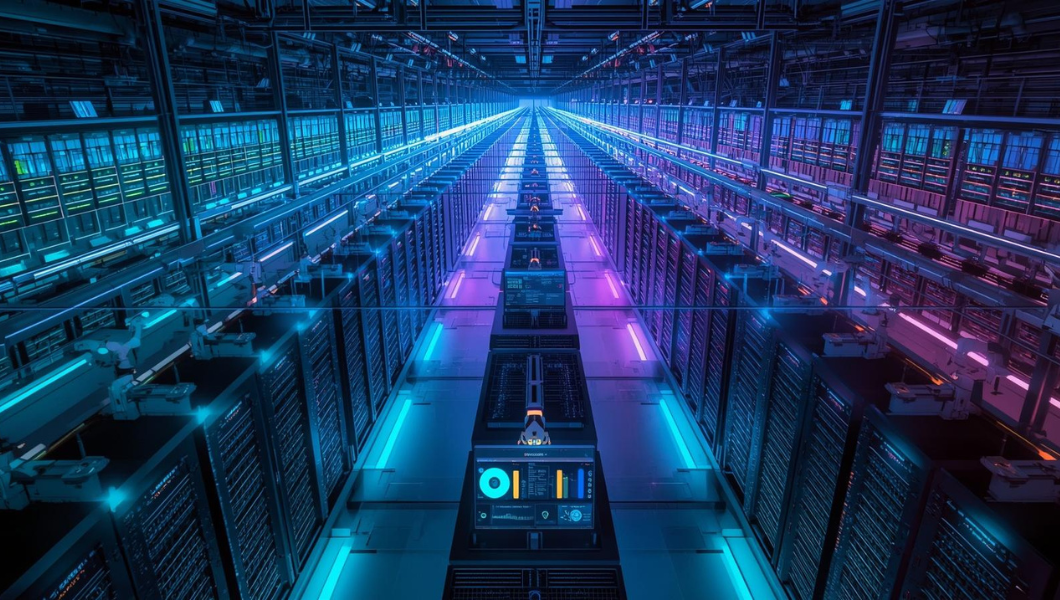
At GTC 2026, Nvidia introduced its vision of “AI factories” — large-scale, infrastructure-driven environments designed to produce, deploy, and operate AI at industrial scale, marking a major leap in AI infrastructure and automation. The concept reflects a major evolution in how organizations think about artificial intelligence: not as isolated tools, but as integrated production systems.
These AI factories combine advanced GPUs, high-performance storage, and optimized inference pipelines to enable continuous AI operations across enterprise workflows.
For enterprises, this signals a clear shift toward AI infrastructure and automation becoming the backbone of digital transformation.
Why Nvidia’s AI Factories Matter
Nvidia’s announcement highlights several critical trends shaping enterprise AI:
AI Is Becoming an Industrial System
AI factories represent a move from ad hoc AI usage to structured, repeatable systems that can:
- Train and deploy models continuously
- Power real-time decision-making
- Support large-scale automation
- Integrate across business functions
AI is evolving into an operational layer — similar to cloud or data infrastructure.
Infrastructure Defines AI Capability
The performance of AI systems increasingly depends on infrastructure:
- GPU clusters for compute-intensive workloads
- Data pipelines for real-time processing
- Distributed systems for scalability
Organizations with strong infrastructure foundations can deploy AI faster and more effectively.
Automation Requires Scale
Enterprise automation is no longer limited to simple workflows. AI factories enable:
- Multi-agent orchestration
- Continuous model updates
- High-volume task execution
This allows businesses to automate complex operations across departments.
What This Means for Enterprise AI Strategy
For enterprises, Nvidia’s vision points to four strategic priorities:
1. Treat AI as Infrastructure, Not a Tool
AI should be embedded into core systems and workflows — not used as a standalone solution.
2. Invest in Scalable Compute and Data Systems
Reliable infrastructure ensures AI systems can handle growth, complexity, and real-time demands.
3. Build for Continuous Automation
AI systems must operate continuously, adapting and improving over time rather than running as one-off processes.
4. Align Automation with Business Outcomes
AI infrastructure should support measurable results — including efficiency gains, cost reduction, and revenue growth.
How ProjectBloom Powers Infrastructure-Driven AI Automation
ProjectBloom is built to help enterprises operate within this new paradigm of AI factories and scalable automation.
🌐 Cloud-Native, Scalable Architecture
ProjectBloom integrates with modern AI infrastructure, enabling organizations to deploy automation across distributed environments.
🤖 Multi-Agent Orchestration
Coordinate multiple AI agents across workflows — from marketing to operations — within a unified platform.
🔒 Governance and Control
Ensure all AI workflows operate within defined policies, with full auditability and compliance.
📊 Performance and ROI Tracking
Monitor automation outcomes in real time, linking AI activity to business performance.
By aligning automation with infrastructure, ProjectBloom helps enterprises move from experimentation to production-scale AI.
The Future of Enterprise AI Is Factory-Driven
Nvidia’s “AI factories” vision signals a fundamental transformation: AI is becoming a production system that drives enterprise operations at scale.
Organizations that embrace infrastructure-driven AI — supported by scalable platforms and governance frameworks — will lead the next wave of digital transformation.
ProjectBloom enables enterprises to operationalize AI as a system — delivering scalable, governed, and high-impact automation.
🚀 Ready to build AI workflows powered by next-generation infrastructure?
Request a demo and discover how ProjectBloom supports scalable, enterprise-ready AI automation.
References
🔗 TechRadar. “Nvidia GTC 2026 keynote coverage — AI factories vision.” Mar 2026.